
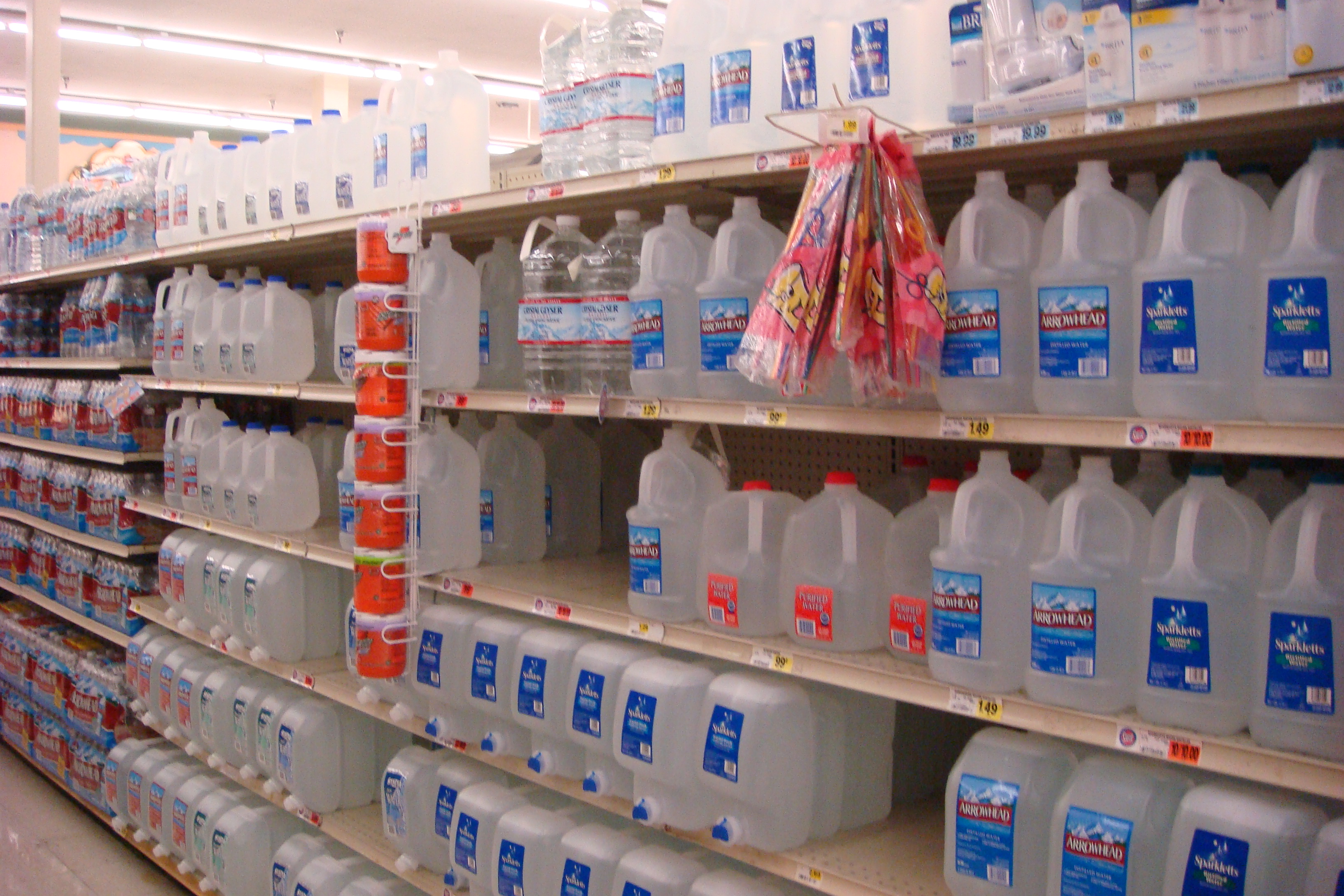
You’re in the city and the power goes out, what is that first thing you do? If your first instinct is to fill your bathtub with potable (drinkable) water then you probably have you head on straight or have done a little reading. In the advent of power shortage how long does the water run in a city? If you are in the countryside do you have a hand operated pump that can be fitted in place of your electric pump? Food for thought. For my part I enjoy grabbing jugs of water when I go grocery shopping as a supplement to our food storage for a couple of bucks, but I know I don’t have enough.
So the question inevitably leads to that of how much water should we stock up on with our food storage and survival equipment? If you have a water source readily available then it may not have to be much so long as you have a means of boiling, filtering, or purifying the water to make it potable. We all differ by physical status and activity as to how much water we need to consume to maintain healthy functionality. If you are planning a cross country trip you will need substantially more water than a group of people chilling in a secret bunker.
The benefits and necessity of water are many. Water is the principle component of our bodies, making up 60% of our body weight. Every system in our bodies depends on water. This liquid flushes toxins out of our vital organs and carries nutrients to our cells. Water also provides a moist environment for tissues in the throat, nose, and ears.
A lack of water will lead to dehydration, a condition where our organs began losing their ability to carry out their natural functions. Even mild dehydration can lead to a loss of energy and make you tired, while severe dehydration will lead to your body systematically shutting down as it goes through the stages of shock.
As we breathe, perspire, and use the facilities we lose water. According to the Institute of Medicine an adequate intake (AI) for men is roughly 3 liters (about 13 cups) of total beverages a day. The AI for women is 2.2 liters (about 9 cups) of total beverages a day. So if you don’t have water readily available multiply daily consumption by the number of persons in your household, by how long you want your food storage to last. Of course these numbers become relatively moot in the advent of a bug out, because water gets heavy quick; but that’s another story.
From Mayoclinic.org; Nutrition and healthy eating:
Factors that influence water needs
You may need to modify your total fluid intake depending on how active you are, the climate you live in, your health status, and if you’re pregnant or breast-feeding.
- Exercise. If you exercise or engage in any activity that makes you sweat, you need to drink extra water to compensate for the fluid loss. An extra 400 to 600 milliliters (about 1.5 to 2.5 cups) of water should suffice for short bouts of exercise, but intense exercise lasting more than an hour (for example, running a marathon) requires more fluid intake. How much additional fluid you need depends on how much you sweat during exercise, and the duration and type of exercise. During long bouts of intense exercise, it’s best to use a sports drink that contains sodium, as this will help replace sodium lost in sweat and reduce the chances of developing hyponatremia, which can be life-threatening. Also, continue to replace fluids after you’re finished exercising.
- Environment. Hot or humid weather can make you sweat and requires additional intake of fluid. Heated indoor air also can cause your skin to lose moisture during wintertime. Further, altitudes greater than 8,200 feet (2,500 meters) may trigger increased urination and more rapid breathing, which use up more of your fluid reserves.
- Illnesses or health conditions. When you have fever, vomiting or diarrhea, your body loses additional fluids. In these cases, you should drink more water. In some cases, your doctor may recommend oral rehydration solutions, such as Gatorade, Powerade or CeraLyte. Also, you may need increased fluid intake if you develop certain conditions, including bladder infections or urinary tract stones. On the other hand, some conditions such as heart failure and some types of kidney, liver and adrenal diseases may impair excretion of water and even require that you limit your fluid intake.
- Pregnancy or breast-feeding. Women who are expecting or breast-feeding need additional fluids to stay hydrated. Large amounts of fluid are used especially when nursing. The Institute of Medicine recommends that pregnant women drink 2.3 liters (about 10 cups) of fluids daily and women who breast-feed consume 3.1 liters (about 13 cups) of fluids a day.
Beyond the tap: Other sources of water
Although it’s a great idea to keep water within reach at all times, you don’t need to rely only on what you drink to meet your fluid needs. What you eat also provides a significant portion of your fluid needs. On average, food provides about 20 percent of total water intake. For example, many fruits and vegetables, such as watermelon and tomatoes, are 90 percent or more water by weight.
In addition, beverages such as milk and juice are composed mostly of water. Even beer, wine and caffeinated beverages — such as coffee, tea or soda — can contribute, but these should not be a major portion of your daily total fluid intake. Water is still your best bet because it’s calorie-free, inexpensive and readily available.
Jon
For some additional reading on my website in regards to water please check out some of these articles:
http://prepare-and-protect.net/2013/11/drink-water/
http://prepare-and-protect.net/2014/05/dont-drink-cactus/
http://prepare-and-protect.net/2014/04/cistern/
http://prepare-and-protect.net/2014/04/xylem-filter/
http://prepare-and-protect.net/2013/11/solar-water-still/
http://prepare-and-protect.net/2013/11/water-filter/
Leave a Reply